I grew up in Norway, so my relationship with the sun was mostly theoretical. Now I live in Southeast Asia, and unlike Oslo, there's actual sun here. Around the same time I started reading Dr. Ahmad Ammous and listening to Jack Kruse, and their message is simple: light runs your biology, and modern life has the light completely backwards. Three weeks ago I decided to test it on myself.
The morning came first. Every morning I walk barefoot into the grass, face the sun, and do my breathing exercises while my eyes adjust to the morning light. No screens, no sunglasses, just standing there. My old habit was the opposite - checking the phone first thing, in a dark room, feeding my brain the world's problems before it was even awake. The difference surprised me. I'm calmer through the whole day, and the usual suspects on X don't get under my skin the way they used to. The feed didn't change. I did.
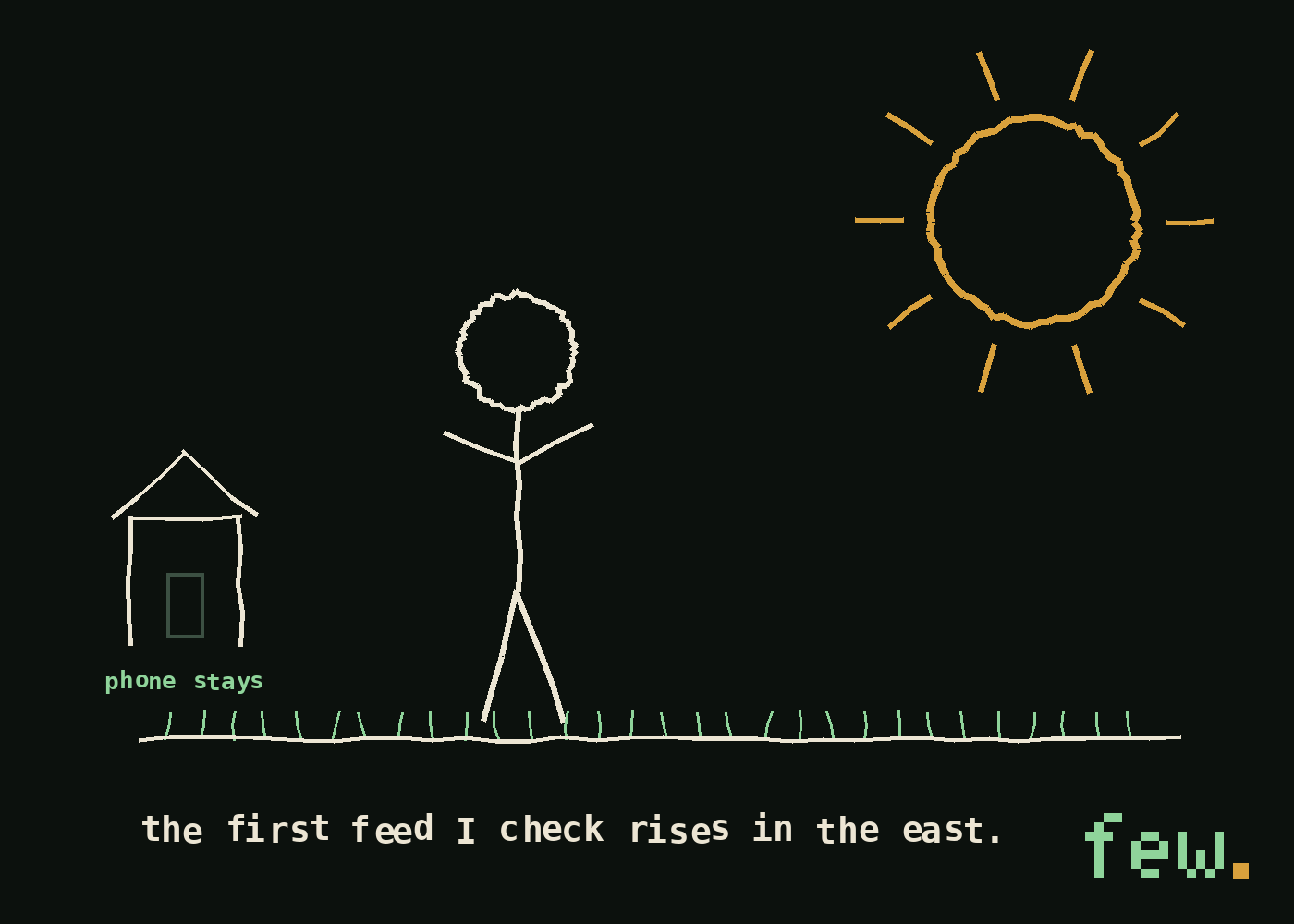
the first feed i check now rises in the east
"Watch every sunrise. If you do this every day of your life, you will have the greatest impact on your health." - Jack Kruse
Quitting sunglasses was harder. I've been taught my whole life that we should protect ourselves from the sun. But the more I read, the more this goes in the same category as everything else I've had to unlearn from the fiat world - the official advice serves the people selling the solution, not you. Same with sunscreen. Scary at first, I admit. But Kruse makes a lot of sense to me here: why block the skin from taking in what the sun provides? The same sun that gives life to nature, animals and us humans. Makes no sense. I'll come back to sunlight properly in a later article - it deserves its own.
"Sun exposure through the eyes is essential for brain health." - Dr. Ahmad Ammous
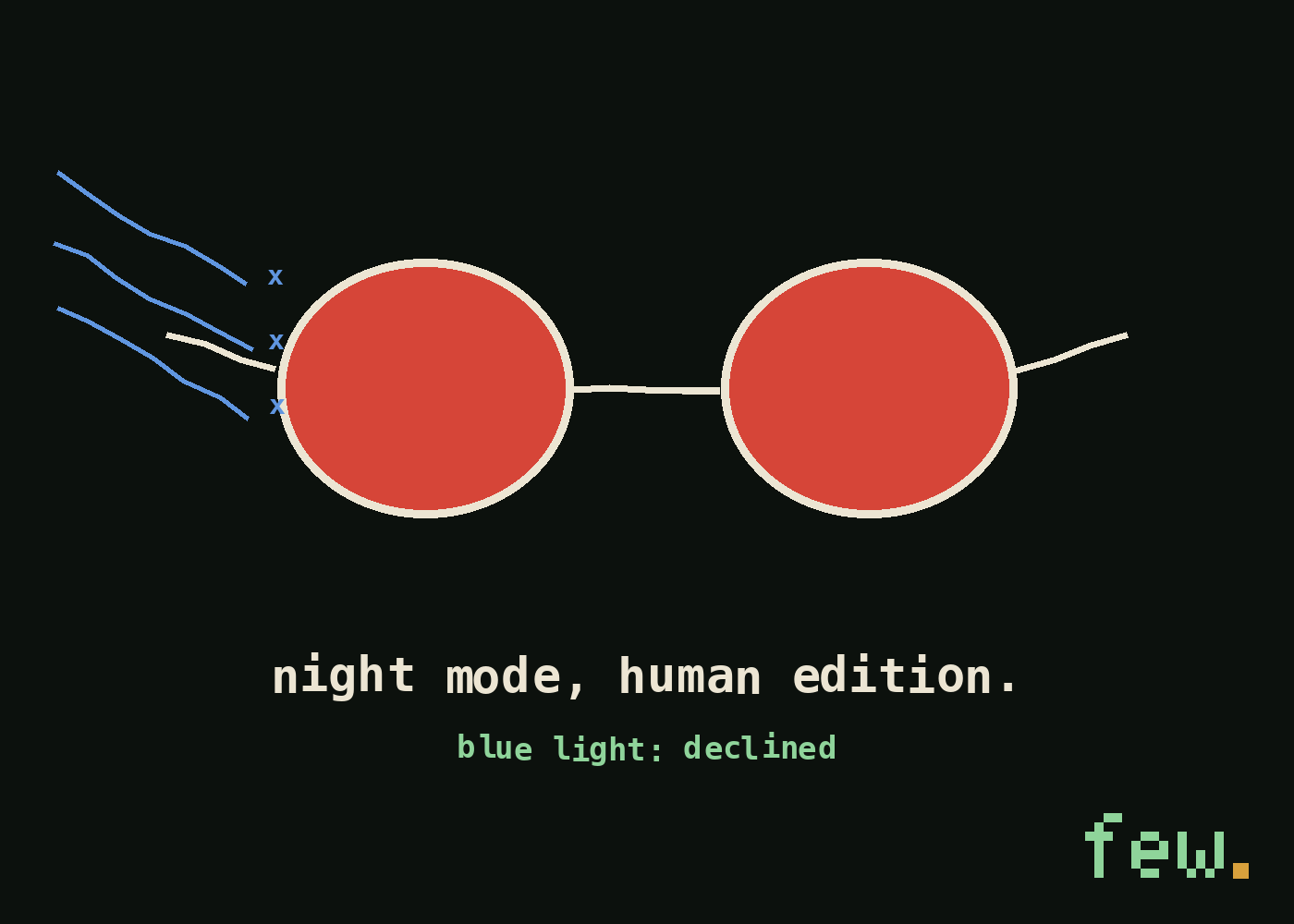
Then the nights. I started changing the house. The ceiling spotlights are off after sunset now, replaced with floor lamps that keep the evenings low and warm. And I bought a pair of blue light blocking glasses - the red lens kind - that go on when I work on the computer at night.
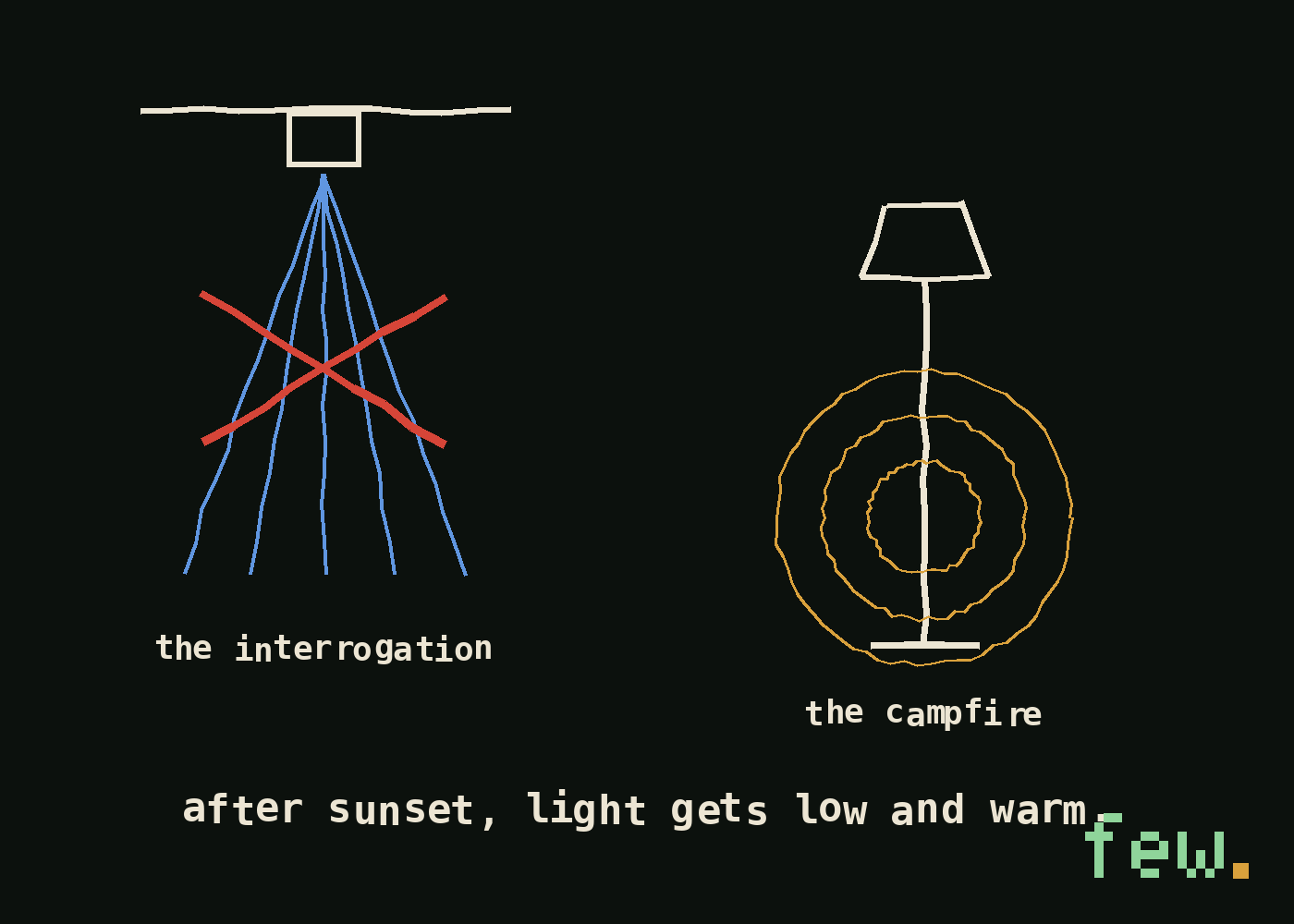
after sunset, light gets low and warm
Here's the thing to understand about why this works, and it's the same logic as the money. A screen at night is blue-dominant light with none of the red that balances it in nature. Your brain reads blue as noon. So every evening in front of a bright screen, your body waits for a midday that never ends, and the sleep signal never gets sent. Nobody has to design this to hurt you - the incentives of a screen economy do it alone. Think about how new this is for a second: for all of human history, night was dark. We are the first generations to flood our nights with noon-light, and we've had a few decades to adapt to something our bodies spent two hundred thousand years never seeing.
"We're the only species smart enough to create artificial light but stupid enough to live under it." - Jack Kruse
After a month of nights with the glasses on, I can say it plainly: it works. My brain relaxes. My eyes relax. I get naturally sleepy in the evening instead of wired. As an ENTP and a highly sensitive person - light, smells, sounds all hit me harder than most - the effect has been bigger than I expected. The evenings feel like evenings now.
What I actually do: sunrise outside, barefoot in the grass, eyes east. No sunglasses. Spotlights off when the sun goes down, floor lamps on. Red lenses on for any screen after dark. Total cost: one pair of glasses and two lamps. The sun handles the rest for free.
The artificial world wants your nights. Keep them. Few understand.